 MarceloBlog
How Do I Use AI for Content Marketing?

Use AI for content marketing by giving it a clear brief, asking for a focused draft, checking every claim, and reviewing the finished piece before publishing. Start with one customer question and one useful answer—not a request to “write some marketing content.” Keep responsibility for facts, voice, and approval with you.
A practical workflow is: choose a question → supply the facts → plan the answer → draft → review → publish → evaluate. Treat the draft as material to edit, not as permission to publish without checking it.
Marcelo is online software you can use for content marketing, search engine optimization, social media management, website design, paid advertising, and marketing strategy. For content planning, you can choose location and service page drafts, review proposed pages beside an existing site, and work through content before approval.
Here is how to build a deliberate AI content workflow around your business’s actual information.
What should I give AI before asking it to write?
Prepare a brief that separates verified information from writing instructions. Tell the AI what the piece must answer, who it is for, and which facts it may use.
Include:
The customer’s question:
Use the wording you want the piece to answer.
The intended reader:
Describe what they are trying to understand or decide.
The purpose:
Choose one main job, such as explaining a service or answering a buying question.
Approved facts:
Supply the relevant business details, service descriptions, and supporting information.
Boundaries:
Identify claims, topics, or promises the draft must not include.
Voice:
Give practical direction, such as “plain English, direct, and without hype.”
Next step:
Specify the action the reader should take after reading.
Keep facts and preferences separate. “Use a confident tone” is a writing preference; “we guarantee results” is a factual claim that needs support.
A reusable brief might read:
Write a guide answering [customer question] for [intended reader]. Use only the approved information below for claims about the business. Answer the question directly in the opening. Organize the explanation around the reader’s next questions. Do not invent prices, credentials, locations, examples, statistics, or results. Flag missing information separately for review. End with [approved next step].
Use this as a briefing template rather than a product-specific set of commands.
Which content should I start with?
Choose one question you can answer accurately and usefully with the information you already have. Avoid starting with a large batch simply because you want more pages.
Before requesting a draft, write down:
The exact question.
The answer you want the reader to understand.
The facts needed to support that answer.
The details that still require verification.
The appropriate next step.
If you cannot complete the supporting information, narrow the topic or gather the missing details first.
For a service page, plan an explanation of the service and the relevant next step. For a reference article, prioritize instructions, decision criteria, and answers to follow-up questions. Do not force every educational article into a sales pitch.
Marcelo’s content planning workspace lets you choose which location and service page drafts get written before they move to review. Use that planning stage to decide what each page should contribute, rather than treating every possible topic as a publishing priority.
How do I turn a question into a useful draft?
Plan the answer before requesting the full article. Ask for a structure that follows the reader’s decision or task.
For a how-to guide, use this sequence:
- Give the direct answer.
- Explain what the reader needs before starting.
- Walk through the process in order.
- Identify what to check before proceeding.
- Answer the remaining practical questions.
Review the structure yourself. Remove sections that repeat the opening, drift away from the question, or require evidence you do not have.
Then request the draft. For longer pieces, review one section at a time. Check whether each section does a distinct job: explaining a step, defining a choice, or resolving uncertainty.
During revision, give specific instructions. Instead of “make this better,” try:
Rewrite this section as a sequence of actions. Keep the supplied facts unchanged. Remove unsupported claims and repeated advice. Identify any information needed to make the instructions more precise.
Do not approve a paragraph merely because it sounds polished. Ask whether it actually helps the reader do or understand something.
What should I check before publishing AI content?
Use separate reviews for accuracy, usefulness, and presentation. Do not combine them into a quick skim.
Accuracy
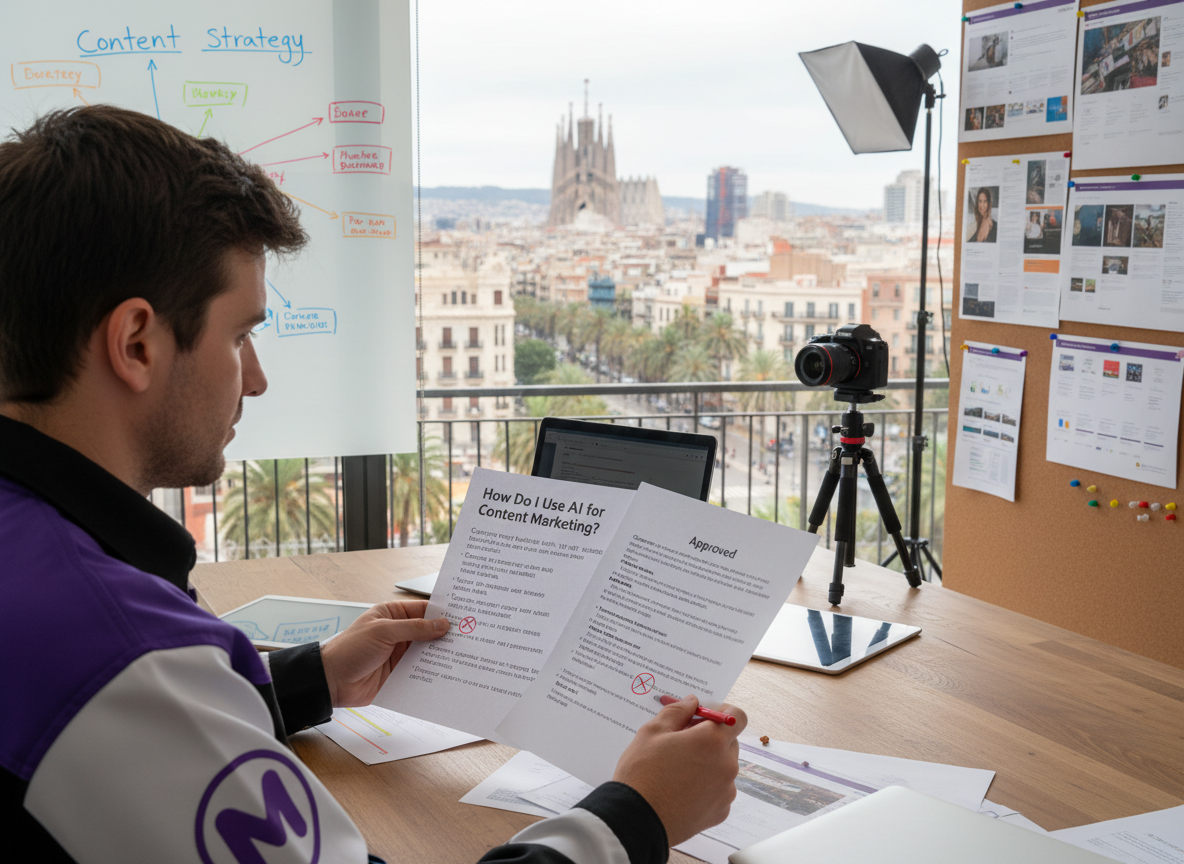
Compare every business claim with your approved information. Pay particular attention to:
- Service descriptions and availability.
- Locations and service areas.
- Prices, offers, and payment terms.
- Qualifications, awards, and experience.
- Customer quotations and reported outcomes.
- Contact details and next steps.
Remove any claim you cannot support. If the missing detail is important to the answer, obtain it before publishing rather than replacing it with a plausible guess.
Usefulness

Read the piece as someone asking the original question. Does the opening answer it? Are the instructions specific enough to follow? Does each heading introduce something new?
Replace vague directions such as “optimize your content” with an action the reader can take. For example: “Compare the opening paragraph with the customer’s question and rewrite it if it does not answer that question directly.”
Presentation

Check headings, paragraph length, terminology, links, and the final call to action. Remove internal notes and unresolved placeholders from the publishable version.
Marcelo’s page-review workspace shows proposed pages beside the existing site before anything goes live. Use that comparison to check both the new wording and any information the revision would remove.
How should I use AI for location and service pages?
Give each page its own brief. Specify the service it explains, the intended reader, and the location information you are authorized to use.
Do not instruct AI to fill gaps with local-sounding detail. Verify service coverage, addresses, and any statements about a particular place before including them.
For each proposed page, ask:
- What question does this page answer?
- Which approved facts belong here?
- What distinguishes its purpose from the other drafts?
- Does it repeat another page without adding a useful explanation?
- Is its next step appropriate to the content?
Marcelo’s content workspace supports drafting multiple location-specific service pages. Review each draft individually, even when several pages are planned together. Do not treat approval of one page as approval of the whole batch.
How can I use AI to adapt content for social posts and video?
Begin with an approved source piece. Select one idea for each adaptation and keep the underlying facts unchanged.
For a social post, request one focused takeaway rather than a compressed version of an entire guide. For a video draft, decide which question it should answer and which details must remain in the script.
Review each version on its own. Check whether shortening the source has removed an important qualification or changed the meaning of a claim. Do not add a new offer, promise, or customer outcome just to make the adaptation more persuasive.
In Marcelo, you can review visual content before it is scheduled, work with social posts on a content calendar, and review a generated video before approving it or sending it back for changes. Keep those review decisions deliberate: approve the message and the visual content, not just the format.
How do I decide what to improve next?
Choose the purpose of the content before deciding how to evaluate it. Keep editorial quality checks separate from any performance measures you track.
For editorial review, ask:
- Is the answer accurate and complete?
- Are the instructions clear?
- Have any business details changed?
- Does the next step still make sense?
For performance review, select measures connected to the piece’s purpose using the reporting available to you. Record what you changed and when. Do not present an improvement in writing as proof of more inquiries, sales, or visibility.
Start with one piece, review it thoroughly, and use what you learn to refine the next brief. To begin working with Marcelo, get started on its website.
Frequently asked questions
Should I publish an AI draft without editing it?
Review it first. Check the factual claims, answer quality, wording, and next step. Approve the finished piece only after resolving unsupported statements and missing details.
How much information should I put in the brief?
Supply enough verified information to answer the chosen question. Include relevant facts, the reader’s goal, writing preferences, and clear boundaries. Narrow the topic if the available information cannot support a complete answer.
Can I turn one article into several social posts?
Use the approved article as the source and give each post one clear focus. Review every adaptation for accuracy and context before scheduling it.
What can I use Marcelo for in this workflow?
You can use Marcelo to plan and draft location and service pages, review proposed website pages beside the existing site, review visual content and generated video, and organize social posts on a content calendar.